
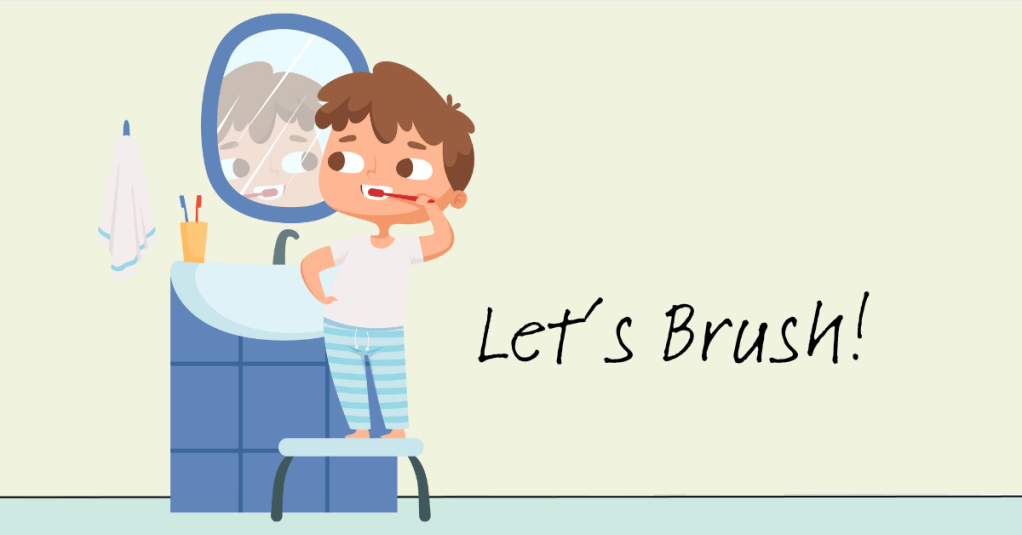
Put some fun into getting your kids to brush their teeth with this chart and give them something to look forward to while you work on building this healthy habit with them!
I was becoming absolutely exhausted every day of battling my four-year-old at bedtime when it came time to brush her teeth. Tears, fits, whining–the whole nine yards. One night I put my face in my hands and cried alongside her purely out of frustration.
I could not figure out why she was so resistant to brushing her teeth. We do it every single night. We have since before she could even hold the toothbrush herself. It’s part of her routine. Why does she get so upset? And how do I get her to appreciate taking care of herself instead of dreading it?
While I’m not sure I answered any of those questions, I did figure out a way to get her to brush her teeth at bedtime with much less fuss, AND to brush in the morning, which we struggled with doing consistently for a long time.
Enter: The Brush Teeth Chart.
I’ll be honest, this was my Hail Mary pass…and it landed in the arms of the wide receiver in the end zone. If you aren’t familiar with football nomenclature, that means that this was the last idea I had, and gave it a shot against all the odds. To this day, I have no idea why this appealed to her, but somehow it got her to make brushing her teeth twice a day a priority in her very busy four-year-old life.

I created a chart with 50 teeth on it, printed it out, and grabbed a sheet of the millions of stickers we have around here. I taped it to her bathroom wall near the sink and told her that each time she brushed her teeth at night and in the morning, she could put a sticker on one of the teeth.
I sweetened the deal by telling her that once she filled up the chart, and every single tooth had a sticker on it, she could pick out a “prize” from mommy’s special prize box.
I do not have a special prize box, y’all. I said that because it sounded like something that would appeal to her and, because I didn’t need to have it immediately, I could noodle it later and come up with one when she got close to filling up the chart, or totally disregard it if the chart ended up not working. Basically, I gambled. But it worked.
She is now 2 brushes away from filling her chart and she could not be more excited about receiving a prize from mommy’s special prize box.

Having this chart has allowed us to praise her daily for developing a good habit.
Being a parent, it’s very easy to correct behavior we don’t love. We tend to focus less on praising behavior we appreciate and like, because it becomes our expectation. However, when my four-year-old is only being told what not to do, and not being encouraged or praised for good habits, she tends to shut down and stop doing the good stuff too.
This actually makes so much sense.
Think about this in terms of the workplace. Ever had a manager who was quick to call people out on their errors or mistakes but never paid anyone a compliment? Their expectations are unrealistically high? You never get a thank you or praise for making the tight deadline, pivoting quickly when a client changed their mind, or going above and beyond your job description? Maybe they take all the credit for your hard work? This makes you feel pretty underappreciated, right?
Pause for dramatic effect to let that sink in for a minute.
The same way that we as adults appreciate being appreciated, our littles need it even more for their little developing minds that are learning confidence and hard-wiring habits.
In my limited experience as a parent (a four year veteran), I have learned that it is important to praise desired behavior as much, if not MORE than undesired behavior because it encourages her to continue behaving that way and gives her a boost of confidence to not just do it one time, but all the time.
If she is only told what not to do, and not what to keep doing, she’s guessing at the right thing to do. Personally, I’m all about giving her the answers and having her know right from wrong, desired behavior from undesired behavior. Which is why praise for desired behavior works and helps motivate her.
This chart not only serves as motivation, but as a reminder to me to praise her for her progress. Especially when it’s the end of the day, we’re both tired and overstimulated, and I have nothing left to give except a goodnight kiss.
This truly became more than just a chart to track when she was brushing (or not brushing). We’ve both learned a lot by implementing and using it for the past 50 days.
Which is why I believe this has worked so well.
It also helped build her confidence in task completion. Each time she completes brushing her teeth, she gets a feeling of accomplishment when she adds that sticker and gets closer to her goal.
It also helps teach a basic level of responsibility. After about a week, I didn’t have to remind her to add a sticker to her chart. She learned quickly that if she forgot to add a sticker, she didn’t get to go back and add one. Now she habit stacks and immediately after brushing her teeth, she adds the sticker before moving on to brushing her hair.
Adding a sticker is also something she doesn’t need help doing. By keeping the stickers in an accessible location for her, she can do it all by herself. If you have ever met a four-year-old, you know they are all about doing things on their own, in their own way, with absolutely no help from you.
If you’re worried your kiddo will add stickers just to add stickers, try trusting them first before jumping right to the assumption they’ll cheat. Trust first, and then if you notice there are more stickers on it than there should be, calmly address it and let them know that cheating their way won’t get them a prize. It has to be fair and square. It’s a great lesson in trust and honesty, too.
After about two weeks, I didn’t even have to remind her to brush her teeth. She was already in the bathroom and doing it so she could add her sticker. She made it her mission and part of her routine to add that sticker right after she brushed her teeth so she wouldn’t forget again.

If you are struggling to get your little one to brush their teeth at night or in the morning, or both, download this chart and print it out. This is the exact chart I created for my four-year-old.
Then, grab some fun stickers so your little one can put a sticker on a tooth each time they brush their teeth. If you don’t have stickers, not a problem! You can cross teeth out, color them in, or draw an X over them–whatever works! Use what you have.
Next, explain to your kiddo how it works. Each time they brush their teeth, they get to add a sticker. Once the chart is full, they get to pick a special prize. Pro tip: Make it clear that they only get two stickers a day, or you risk having them trying to brush their teeth every hour to rack up those stickers.
If the whining or fit throwing starts when it’s time to brush teeth, remind them of their chart and the progress they need to make in order to fill it up to get a special prize (or reward of your choosing). Stick to the chart. It may take a couple days for the idea to sink in with them. And don’t let them add a sticker if they didn’t brush their teeth. No brushing, no sticker. Be firm on that rule. After all, you’re trying to build a habit.
When the time comes for them to choose a special prize, do not leave it up to them to choose what they get. The prize should be appropriate to the task completed.
For example, in two days when Viv’s chart is full, she will get to choose between a new toothbrush + new toothpaste, a small 10 piece puzzle, or some new stickers (to replace the ones she used for her chart). Her dad and I will also praise her for sticking to her goal, making it to the end of her chart, and creating a habit that we are proud of her for and that will keep her healthy.
We are not going to the toy store for her to pick out a new toy or rewarding with sugary candy or treats (kind of defeats the purpose, in my opinion). These are items I picked up from the dollar store or during a regular grocery order. I placed them in a gift box I had laying around as my “special prize box” and will potentially leave them there if I need to pull it out again for something else.
Don’t put unnecessary pressure on yourself or overcomplicate it. They brushed their teeth–something you need them to do anyway (and should now be a habit!). It’s not like they cleaned the entire house by themselves or saved a baby in a runaway stroller from oncoming traffic.
We are two days from the finish line and Viv is already asking if she can fill another chart. It’s become a part of her routine that she enjoys and, if that’s what she needs to keep her motivated and encouraged to brush her teeth, I think I can handle another piece of paper and some stickers for another 50 days.
Habits, especially healthy habits, are a hard thing to establish in kiddos and it’s even harder if it’s met with resistance and frustration. Trust me, I’ve been there. It’s how this chart was born!
I truly hope this helps you with your little one the way it helped me with mine! Remember, Rome wasn’t built in a day. Be patient, trust the process, and offer encouragement. They’re learning too.
Until next time,





 Minnesota Millennial Mom
Leave a comment