
Hard times, emergencies, and the unexpected are all unfortunately a part of life. Being prepared just in case something happens is the best thing you can do when something hits you and your family without warning.
I hate writing this post already, but it’s been on my head and heart for the past few weeks. Let me start out by saying that this isn’t a fun one to write. But one I believe is very necessary.
2024 was a tough year for a lot of families. It seemed everywhere I turned there was news of sudden deaths, health crisis, and medical scares that were completely out of the blue. Things like cancer diagnosis, emergency room visits, injuries, car accidents, and more.
If you’re cringing as you read this and it’s already bumming you out, I’m sorry, but please keep reading. I acknowledge that it sucks to discuss and talk about. But it sucks even more when you have absolutely no freaking clue what to do or where to find things or information you need on top of dealing with an emergency or unexpected crisis.
Though we can’t prevent things from happening, we can be prepared for these unfortunate types of situations. As a mama, wife, daughter, sister, friend, pet owner, and woman…I believe EVERYONE, especially WOMEN, should be prepared for the unexpected.
When I worked in the finance industry, I was blessed to work for advisors that encouraged their clients to plan for the unexpected. The “rainy day” you hope never comes. But especially, the emergencies or health crisis that you aren’t expecting but happen anyway.
It was there that I learned a lot about the importance of planning for the unexpected and for what you know will come eventually (death), hopefully at a very old age.
Over the years as I’ve chatted with other women, I’ve come to learn that many women are unfamiliar with the types of planning tools I’m going to share here. Or, they know about them but leave it up to their spouse to handle and have no clue what to look for or where to find the information if they need it.
If I may be blunt for a moment–don’t be that person. You do not want to find yourself in a situation that is already stressful, emotional, and chaotic only to feel even more helpless because you have no idea what to do, how to answer anyone asking you important questions, or access funds you need.
Like I said before, this isn’t a fun subject. But it is necessary. My hope in sharing this is that by the end you’ll feel a little more confident about handling an emergency or unexpected crisis that might arise. At the very least it will get you thinking about what you need to do to feel more prepared for emergency situations.
That being said, let’s dive into what I believe are five important things to have ready “just in case.”

Power of Attorney & Medical Directives. Also known as POA, Power of Attorney is a formal, written document that gives someone legal authority to act on your behalf. In emergencies, these come in very handy because should you not be able to speak for yourself, your Power of Attorney would be able to do so for you, acting (hopefully) in your best interests. This can apply to finances, business decisions, other legal documents, and just about anything that you would need to sign…your power of attorney can do for you.
My husband and I each have a Power of Attorney, naming each other as the agent. We have had these in place since before we were married and still owned a business together. At the time, this made them an even more powerful tool because neither of us would have had any decision making power on behalf of the other one in an emergency situation, even though we lived together and owned a business together. Legal documents are crucial in emergencies and unexpected situations.
If you are not married, but are in a committed, long-term relationship, I cannot stress how important it is to have one of these in place. If you are not in a relationship or don’t have a partner, choosing a trusted relative, like a responsible cousin or sibling, would be my next recommendation. I want to stress this point as well–make sure this is someone you trust. Remember, they will be making choices for you and this is a legal document so there’s no backsies or oopsies allowed.
Medical directives differ slightly from power of attorney because they are only related to medical care and only apply if someone is unable to make a decision for themselves. You can name someone to make decisions on your behalf, but only regarding medical care and medical decisions. Again, make sure this is someone you trust. In Minnesota, medical directives are used in place of a living will or a durable power of attorney for health care, which are known as advance directives. A quick Google search would tell you what applies in your home state.
You can also describe some of your preferences within the document (i.e., if you prefer to remain on life support, if you never want to be on life support, your burial or cremation preferences, drug or vaccination preferences, etc.). It’s not guaranteed that the person making decisions would stick to that, but they could at least refer to it to see your wishes if they needed or wanted guidance.
Each of these documents can be created by an estate lawyer, which I recommend using so that they documents are done correctly and worded accordingly. It does cost a few hundred dollars to have them drawn up but having them facing a crisis, especially a medical crisis, is oddly comforting. You can also use a service like Legal Zoom to have them created for you.
I also highly recommend getting both of these documents updated if you go through any major life events such as marriage, divorce, or death. In many cases you may name a backup if the first person is not available (due to injury or death, like a car accidents when both of you may be injured), but you’ll want to make sure they are as accurate as possible with correct names and spellings and that anyone listed is alive.

Emergency Fund of $5,000 or more. Many financial advisors and specialists recommend having a $1,000 rainy day fund. This is typically for things like major car repairs, house repairs (pipes, electrical, septic, etc.), or an unexpected bill that comes up. However, for emergencies in today’s world, I recommend having $5,000 or more set aside. This is ideally separate from home repairs, car maintenance, or property taxes, etc. And here’s why.
I hope this never happens, but what if you get a phone call that your spouse fell at work. They’re being transported to the hospital and are conscious but confused. You call your mom to rush over to watch your kids, and then make your way to the hospital where you learn that your spouse has some swelling in their brain from the fall and the best course of action is put them into a medically induced coma so their brain can heal from the impact and swelling.
Not only are you reeling trying to process this news, scared that something even worse will happen, concerned over their health and wondering how you’re going to tell your kids what happened, but now…your only source of income is laying in a hospital bed for an undetermined amount of time.
Maybe you’re thinking, “oh my gosh, Naomi! There are more important things than MONEY! I just want my spouse to be okay!” Yes. Obviously. I want them to be okay too. I hope it all works out great and your spouse walks out of there in a couple of weeks fully recovered and this will be a distant memory very soon.
But in the meantime…you don’t know how long they will be there and you have yourself and kiddos to take care of and provide for. And if you didn’t pay the bills before? You do now. Mortgage or rent, electricity, water, credit cards, etc. That’s all on you. You need money for groceries and gas. Maybe money for childcare if you are planning on spending any kind of time by your spouse’s side without the chaos of kids in a hospital room asking questions and seeing things you might not want them to see.
Listen, it’s not fun to think about. But we have to think about it.
This example I just shared would be a very real scenario for myself if anything happened to my husband while he was working. He is the breadwinner and sole income provider, and while I could easily go find a job…that would be incredibly disruptive to my toddler, who would already be confused and sad that her daddy is sick in the hospital and now mom is gone a lot too.
Planning for things like this isn’t just about you. It’s about you + your family. Your kids, spouse, and anyone else it affects. The last thing you want to do is borrow money from family or max out your credit cards trying to afford to live for awhile. Truthfully, you may end up doing that anyway. But at least right away while the shock and panic is still there, you have $5,000 to pay the mortgage or rent, utilities, buy groceries, and put gas in your car for about a month, maybe more depending on your family’s needs and budget.
Having some cash set aside will give you breathing room when what you need most is to just breathe.

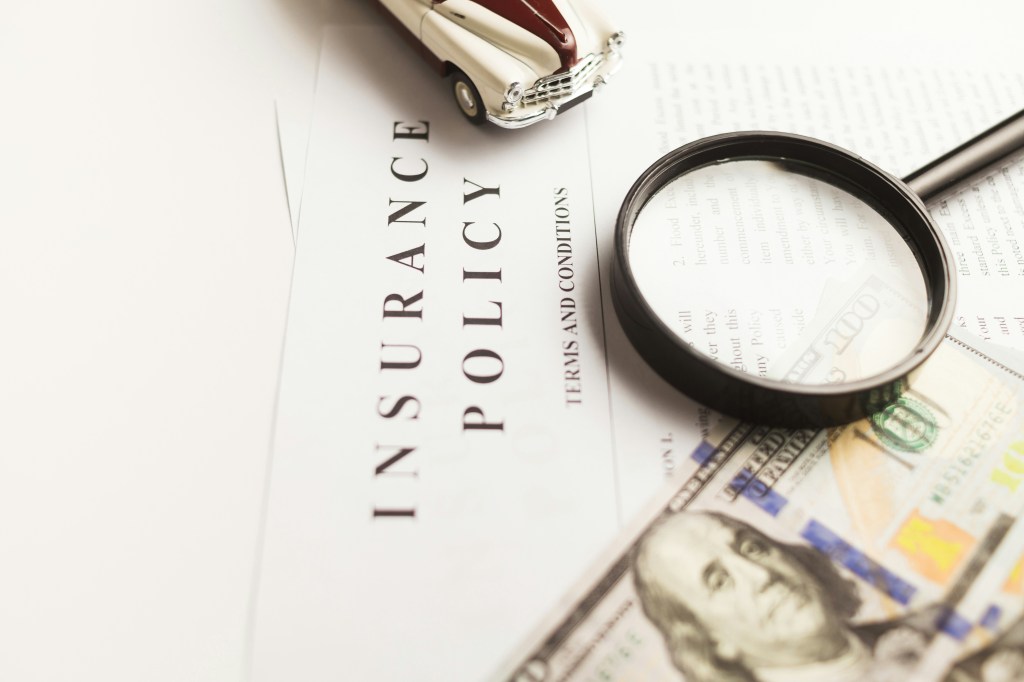
Term life insurance of $100,000 or more. I cannot recommend this enough especially if you depend on someone or someone depends on you for income, or both. Term life insurance is a type of insurance on someone’s life that promises to pay a certain amount of funds if they die during the specified time period. For example, my husband and I each started out with 10-year $500,000 term life insurance policies when we started his business 8 years ago. I got one and he got one, and we made each other the primary beneficiary. What this means is that if, within a 10 year time period, one of us should die, the other would receive $500,000.
This tool is relatively inexpensive for the peace of mind you have if you were ever faced with an unexpected loss of your spouse or partner. I think my policy is about $18/month and my husband’s is $22/month. Typically women’s life insurance is slightly cheaper than men’s due to their average higher life expectancy.
The process is usually very simple. Find a company that sells term life insurance. We use Midland National (Sammons Financial Group, out of Sioux Falls, SD) and I cannot say enough good things about them and the people that work there. They’re helpful, caring, and patient when you ask questions.
Once you find a company that sells term insurance. Specify that you want term life insurance. This is very important. Do not be sold on whole life insurance, which is much more expensive and there are some greedy insurance agents out there who want a big commission, so they’ll try and convince you to get a whole life policy. Don’t do it unless you talk to a financial advisor first. Term insurance. Term. Term. Term.
I recommend calculating the cost of what you spend on mortgage/rent, groceries, gas, activities, trips, daycare…literally everything you spend money on…in a calendar year. Ideally the number would be at least the same amount of income you or your spouse brings in, and then some.
If you unexpectedly passed away, how would your funeral or ceremony costs be covered? Factor that in. How much time would your spouse or partner need to take off of work to grieve? Factor in that income lost if they don’t have PTO or enough to cover it. Do they have the financial means to take additional time off of work or a leave of absence? Factor that in.
To apply, you’ll need to provide some personal and family health history. How much life insurance you’re approved for is based on your current lifestyle and health, and some genetics. The way life insurance works is by calculating how big of a risk it is for the company to insure you.
Some of you may be ignoring this section because you might have a policy through your employer. I cannot stress this enough–make sure it’s enough. Just knowing you have it is not enough. You have to know how much your beneficiary will receive and when, how it pays out, and who is currently listed as the beneficiary.
Too often I have spoken to people and they haven’t even designated a beneficiary. Guess who that money goes to if you are not listed? Not you. Doesn’t matter if you are married or a child to the person, next of kin, whatever. If there is no beneficiary listed, there is no pay out. Check your employer policy and know what it entails. Most likely it is the equivalent of a month or year of salary. Those are also two very different numbers, and are usually not enough anyway.
Money certainly isn’t everything. But let me tell you…it helps. And if you think I’m wrong, try being without it. Especially in times of desperation and emergencies. You don’t want to leave it to chance or “figure it out” while you’re grieving.

Transfer on Death Deed, aka TODD. This one gets honorable mention because many of you reading this probably have aging parents who own their homes or other property. I had no idea this was even a thing until I worked closely with an estate planning attorney and he brought it up every time he met with clients. I also really believe that in today’s modern world, these are more important now than ever.
A TODD is a legal document that allows a property owner to name beneficiaries who will inherit their property after they die. The property is transferred directly to the beneficiaries without going through probate (legal process that involves settling a deceased person’s estate by transferring their property to their heirs), which can save time, money, and stress.
Here’s an example. If you and your partner are not legally married and you live together in a house only one of you owns, this should be important to you. Let’s say your partner owns the house and your name is not listed on the title or mortgage. If they pass away, guess who is technically homeless. You.
A TODD would help solve this if you are named as the beneficiary because it would state that the property now belongs to you. I know several couples who live together but only one of them is listed as the homeowner, even though they both live there and share expenses. Protect yourself and make sure you still have a place to live in the event something happens to your partner. Or protect your partner and get one made for them in the event something happens to you.
Another example is if you have an aging parent that still owns their home. A TODD is particularly helpful because if you are listed as a beneficiary, you would have immediate access to their property, even without a will or trust.
Another modern example is multiple generations living together. There are a lot of people living with their parents these days, or vice versa and your parents are living with you. Whatever the situation, if something were to happen to them (as homeowner) or you (as homeowner), a TODD would protect them or you from having to vacate the property. Trust me, you don’t want to also find out you’re homeless while you’re grieving a loss.
I recommend talking to an estate planning lawyer to have one of these drawn up. They’re fairly inexpensive to have created and are such a stress reliever when it comes down to it. They un-complicate what can be an otherwise complicated process.

Locations of keys, passports, insurance information, passwords, safety deposit boxes, and any other important items or information you may need access to in the event of an emergency. As I’ve been saying throughout, you do not want to be scrambling to figure out where these things are in case of emergency or unexpected loss.
I recommend having everything in one convenient location and knowing where that location is and how to access it. My husband and I have a safe in our home that contains all of these important documents and we both know where the key is at all times, as well as the code to get into it. Passports, copies of our life insurance policies, powers of attorney, medical directives, social security cards, birth certificates, emergency cash, and valuables are all kept together in this spot and updated annually to make sure everything is still there and accounted for and accessible to both of us. We also both know where to find passwords for accounts, should we need them. You don’t need to know every detail, you just need to know how to find them.
Do not ignore this one. Communicate with your spouse or partner, or someone you trust so they know where to find this stuff. Do you know how many places a key can be hidden? Give one to a toddler and see how long it takes you to find. The possibilities are endless. You do not want to be searching hours for a key or calling around to banks or insurance companies or lawyers. It’s a waste of time, and likely time you don’t have to be spending.
Most of these things to have ready “just in case” all have one crucial element: Communication.
I know these are uncomfortable conversations to have, especially about finances and money. It makes me feel cringe too. But I can tell you without a doubt that I will take the discomfort of this conversation ALL DAY if it means I don’t have to have the discomfort of planning and figuring out and trying to answer things I don’t know the answers to when faced with an emergency or unexpected and abrupt loss.
Don’t be scared to have these conversations with your spouse or partner, especially if you have kids. Not knowing or having some of these things would not just impact you, but your family too. Do it for them. And if you are scared, it’s okay. But do it scared. It’s too important.
If you aren’t sure how to bring it up, I recommend not doing it spur of the moment or at night when you’re tired and overly emotional. It’s a heavy conversation, so you want to give your spouse or partner some time to think about it, or at least prepare to have the conversation. Schedule an early morning before kids are awake, or even get a babysitter so you can have uninterrupted time talking it through.
I would plan for two hours, have coffee or tea, and no electronics. Just a couple of notepads and pens for notes and open, honest conversation about the “what ifs” and “just in cases.” Don’t forget the tissues. It’s okay to get emotional. It’s heavy stuff and should be treated that way.
If you’re still here with me, I hope this resonated and you can either confidently say you have all of this in place and taken care of, or that it inspired you to get a move on it. Planning for these things is not just for old people. And if you do most of the work now, it’s a lot easier and less stress to periodically update things than to scramble trying to get all of the details down when you’re short on time and high on stress.
If you do one thing this year, I hope it’s this.
Wishing you and your family a safe and healthy 2025,








 Minnesota Millennial Mom
Leave a comment